2026. 7. 30. 09:14ㆍ카테고리 없음
Picking a beneficiary feels like the easiest part of buying life insurance. You fill in a name, sign the form, and move on. Most people spend more time picking a show to watch tonight than deciding who gets a six-figure payout.
That's exactly the problem.
Beneficiary designations are quiet paperwork until the day they aren't. When a claim gets filed, the form you signed years ago — maybe before a divorce, a new baby, or a falling-out with a sibling — is what actually decides where the money goes. Not your will. Not your intentions. The form.
This guide walks through how beneficiary designations actually work, the mistakes that trip up otherwise careful people, and how to set yours up so it still makes sense five, ten, or thirty years from now.
Table of Contents
- What a Beneficiary Actually Controls
- Primary vs. Contingent Beneficiaries
- Who You're Allowed to Name
- Mistake 1: Naming a Minor Directly
- Mistake 2: Skipping the Contingent Beneficiary
- Mistake 3: Letting Life Changes Go Unrecorded
- Mistake 4: Naming Your Estate
- Mistake 5: Missing the Per Stirpes vs. Per Capita Choice
- Mistake 6: Forgetting Community Property Rules
- How to Name a Beneficiary the Right Way
- FAQ
- Final Thoughts
What a Beneficiary Actually Controls

Quick answer: A life insurance beneficiary is the person, trust, or organization you name to receive the death benefit when you pass away. That designation sits outside your will — and it overrides it — so the insurer pays out based on whatever form is on file, regardless of what a will says.
That last part surprises people. A will can say anything you want. Insurers, though, don't read wills. They read beneficiary forms. If the two disagree, the form wins almost every time.
Which is exactly why it deserves more than thirty seconds of thought.
Primary vs. Contingent Beneficiaries
Two layers exist for a reason.
A primary beneficiary is first in line. A contingent beneficiary (sometimes called a secondary beneficiary) only receives anything if every primary beneficiary is unable to — usually because they died before you, or at the same time.
| Type | Receives The Payout When... |
| Primary | You pass away and they're living |
| Contingent | All primary beneficiaries are deceased or can't be located |
Most people name a spouse as primary. Far fewer bother with a contingent — and that gap is where a lot of avoidable mess happens later.
Who You're Allowed to Name
You have more options than most people realize:
- An individual (spouse, child, parent, friend)
- Multiple individuals, split by percentage
- A trust
- A charity or nonprofit
- Your own estate (technically allowed, rarely a good idea — more on that below)
Naming multiple people is common enough. Just make sure the percentages actually add up to 100. Insurers see forms all the time that split 50/50/50 across three kids, which slows down the whole payout while someone sorts out the math.
Mistake 1: Naming a Minor Directly
Insurance companies won't hand a six-figure check to a nine-year-old. If a minor is named directly with no adult custodian arranged, the money typically ends up under court supervision until the child turns 18 — a process that costs time and, often, legal fees your family didn't need to spend.
There are usually two better routes: set up a trust and name it as beneficiary, or use a Uniform Transfers to Minors Act (UTMA) custodial designation, if your state and insurer support it. A trust gives you more control over how and when the money gets used. A UTMA account is simpler to set up but hands the child full control at whatever age your state sets, often 18 or 21.
Either way, don't leave a child's name sitting alone on the form.
Mistake 2: Skipping the Contingent Beneficiary
Here's a scenario worth sitting with. A couple names each other as primary beneficiaries. No contingent. Years later, they're in the same accident. Now what?
Without a named contingent, the payout usually falls back to the estate — which means probate, which means delay, court costs, and the money getting distributed according to state intestacy law instead of anyone's actual wishes.
A contingent beneficiary costs nothing to add and takes about thirty seconds. Skipping it is one of the most common, and most avoidable, mistakes on the whole form.
Mistake 3: Letting Life Changes Go Unrecorded
Divorce. Remarriage. A new child. The death of a beneficiary you named years earlier. None of these automatically update your policy.
Some states have laws that revoke an ex-spouse's beneficiary status after divorce — but not all states do, and insurers don't always apply it consistently. Relying on a law to clean up your paperwork for you is a gamble. Reviewing the form yourself, right after any major life event, isn't.
A rough rule that works well: check your beneficiary designations at every open enrollment, and again right after a marriage, divorce, birth, or death in the family.
Mistake 4: Naming Your Estate
Technically legal. Almost always a poor choice.
When your estate is the beneficiary, the payout becomes part of your probate assets. That exposes it to your creditors, subjects it to probate delays, and splits it according to your will — or state law, if there's no will — instead of sending it directly and quickly to whoever you actually want to receive it.
Naming a person or a trust keeps the money moving fast and keeps it out of probate entirely.
Mistake 5: Missing the Per Stirpes vs. Per Capita Choice
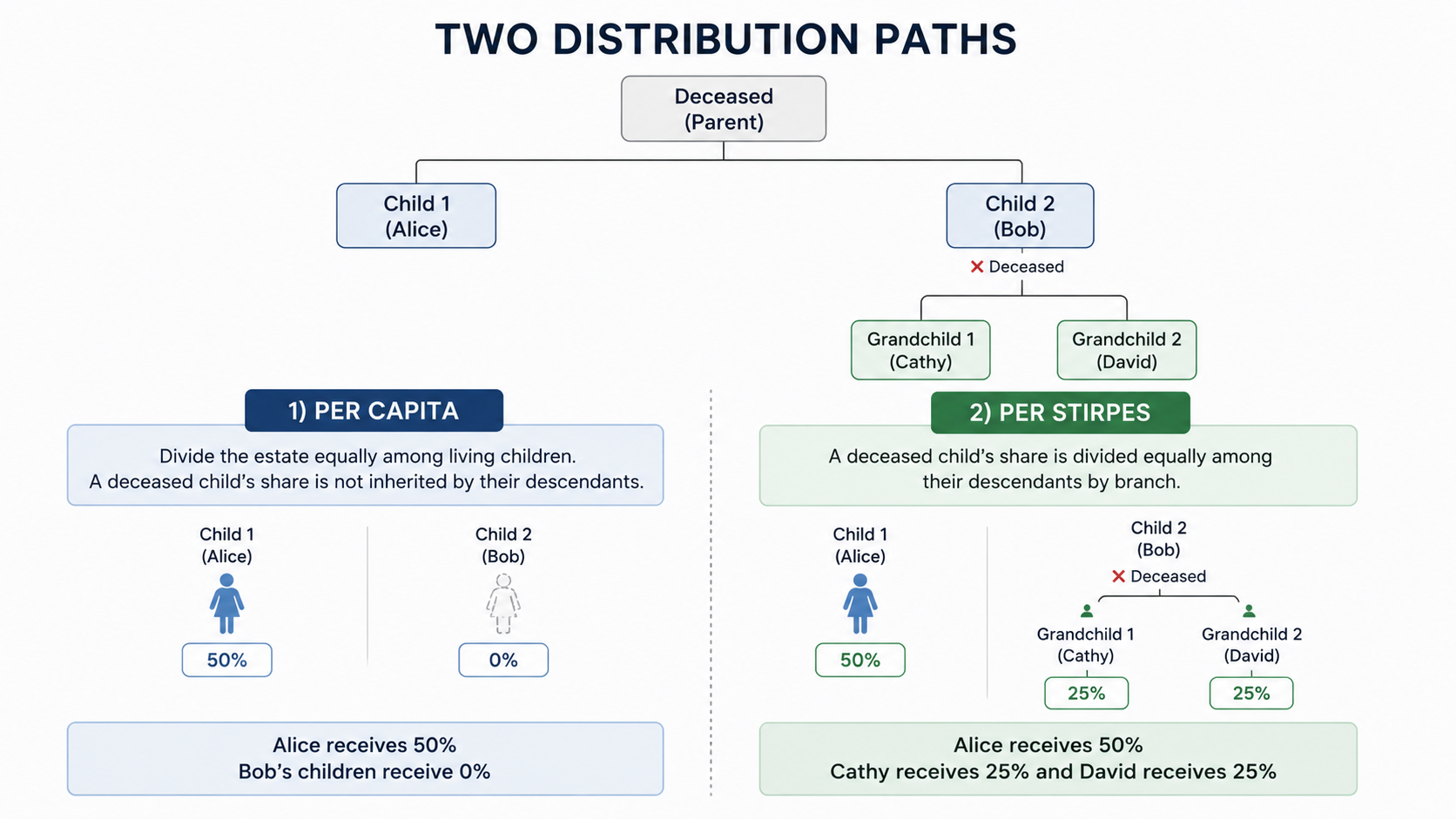
If you're naming multiple beneficiaries — say, three children — most insurers ask you to choose between per capita and per stirpes distribution. It's easy to skip past this box. It shouldn't be.
Per capita means that if one of your named beneficiaries dies before you, their share gets redistributed evenly among the surviving named beneficiaries.
Per stirpes means that beneficiary's share instead passes down to their own children (your grandchildren), keeping each family branch's share intact.
Neither option is objectively better. It depends on whether you'd want a deceased child's share to go to their kids or to their siblings. But an unanswered box usually defaults to per capita, whether or not that's what you'd have chosen.
Mistake 6: Forgetting Community Property Rules
If you live in a community property state — Arizona, California, Idaho, Louisiana, Nevada, New Mexico, Texas, Washington, or Wisconsin — a policy bought during marriage may be considered joint property, even if only one spouse's name is on it.
That can mean your spouse has a legal claim to part of the payout even if you named someone else entirely, and written spousal consent is sometimes required to name a different beneficiary. Rules vary by state, so this is one spot worth a quick conversation with an insurance agent or estate attorney rather than guessing.
How to Name a Beneficiary the Right Way
A short list that covers most of what matters:
- Name at least one primary and one contingent beneficiary.
- Make sure percentages add up to exactly 100%.
- Choose per stirpes or per capita deliberately, not by default.
- Use a trust instead of a direct minor designation.
- Avoid naming your own estate unless you have a specific reason to.
- Check community property rules if you're married and live in one of the states listed above.
- Review the designation after every major life event, and at least once every few years regardless.
- Keep a copy of the current form somewhere your family can actually find it.
None of this takes long. It just takes remembering to do it.
FAQ
What happens if I don't name a beneficiary at all? The payout typically goes to your estate, which means it passes through probate and gets distributed according to your will or, if you don't have one, your state's intestacy laws. This usually takes longer and can expose the money to your creditors — something a named beneficiary avoids.
Can I name more than one beneficiary? Yes. You can split the payout across multiple people or organizations by percentage, as long as the total adds up to 100%. Double-check the math — mismatched percentages are one of the most common form errors insurers see.
Can I change my beneficiary after the policy is issued? In most cases, yes, at any time, as long as your designation is "revocable" rather than "irrevocable." Irrevocable beneficiaries can only be changed with their written consent, so it's worth checking which type you have.
Should I name my minor child as a beneficiary? Not directly. Insurers generally won't pay a lump sum to a minor, so the money can end up tied up in court until they turn 18. A trust or custodial (UTMA) account is the more common workaround.
What is a contingent beneficiary? A backup beneficiary who receives the payout only if your primary beneficiary has already passed away or can't be located. It's a simple addition that prevents the payout from defaulting to your estate.
Can my ex-spouse still be my beneficiary after divorce? Sometimes, if you never updated the form. Some states automatically revoke an ex-spouse's status after divorce, but not all do, and insurers don't apply this consistently. Updating the form yourself is the safer route.
Is life insurance payout money taxable? Generally, no — death benefits paid to a named beneficiary are typically not subject to federal income tax. There are exceptions in certain estate-related situations, so it's worth a conversation with a tax professional if your estate is large or complex.
What's the difference between per stirpes and per capita? Per capita redistributes a deceased beneficiary's share evenly among the surviving named beneficiaries. Per stirpes passes that share down to the deceased beneficiary's own children instead. Which fits better depends on your family's situation.
Can I name a trust as my beneficiary? Yes, and it's often the recommended route when minors or special-needs dependents are involved, since a trust lets you control how and when the money is distributed rather than handing over a lump sum outright.
What happens if my primary beneficiary dies before me and I never updated the form? If you named a contingent beneficiary, the payout goes to them. If not, it typically defaults to your estate and goes through probate — one more reason a contingent beneficiary is worth the thirty seconds it takes to add.
Do I need a lawyer to name a beneficiary? Not for a straightforward designation — most people fill out the form directly with their insurer. A lawyer becomes useful if you're setting up a trust, navigating community property questions, or dealing with a complicated family situation.
Can a beneficiary designation override my will? Yes, and this trips people up constantly. Beneficiary forms take priority over instructions in a will. If they conflict, the insurer follows the form on file, not the will.
What is a revocable vs. irrevocable beneficiary? A revocable beneficiary can be changed anytime without their permission. An irrevocable beneficiary must consent in writing before you can change or remove them — often used in divorce settlements or certain loan agreements.
Should I ever name a charity as a beneficiary? It's a legitimate option if you want part or all of your payout to support a cause you care about. Some people split the designation, naming both family members and a charity by percentage.
Final Thoughts
The beneficiary section of a life insurance form looks like the boring part. It isn't. It's the part that actually moves the money.
Five minutes now — naming a contingent, double-checking percentages, updating the form after a divorce or a new baby — saves your family from probate, court delays, and disputes later. That trade is worth making.
If it's been more than a couple of years since you looked at your policy's beneficiary section, that's usually a sign it's time to check again.
This article is for general educational purposes and isn't a substitute for personalized advice from a licensed insurance agent, estate attorney, or financial advisor.